
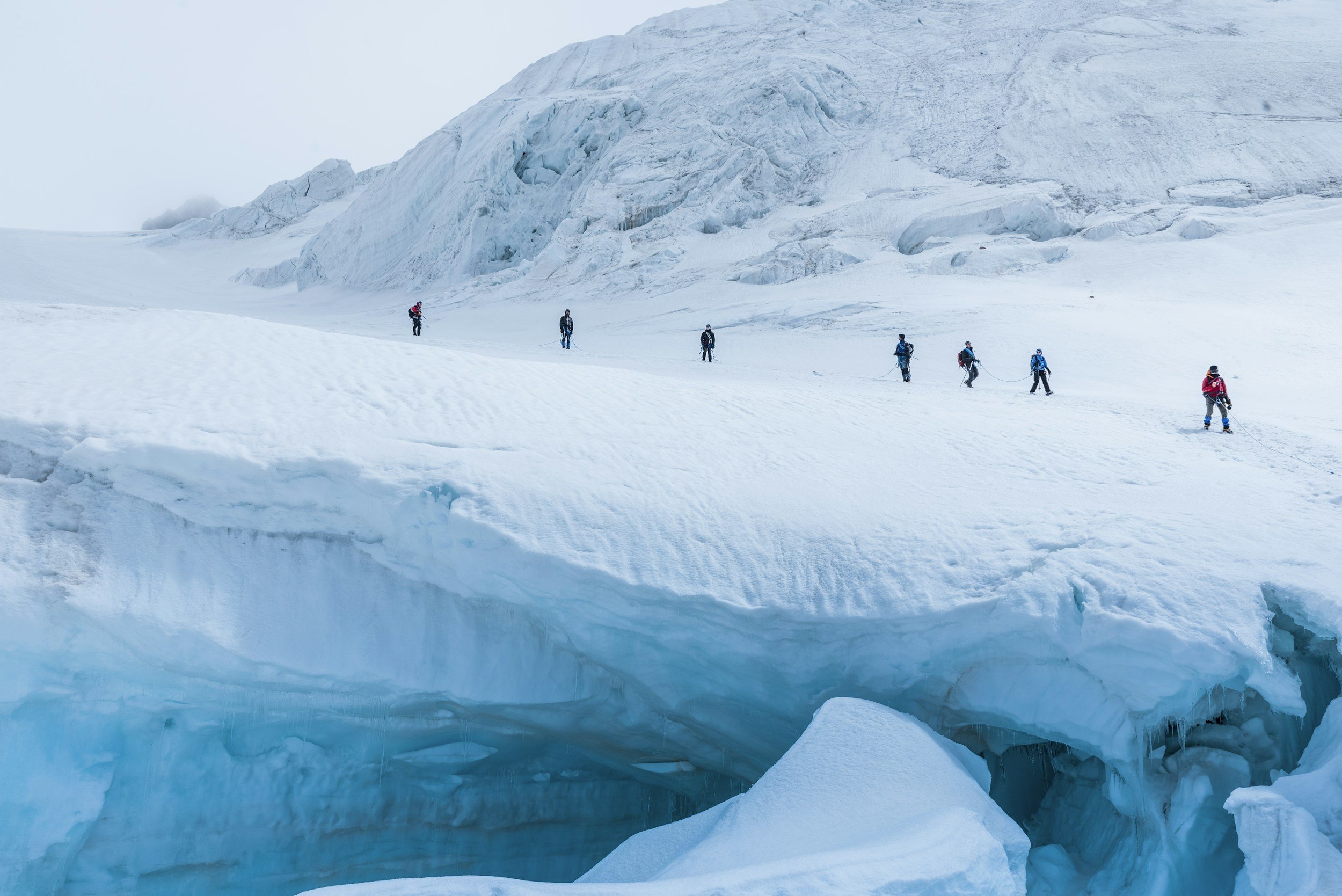
Glacier Travel and Crevasse rescue
Season: Year Round
Duration: 8 hours
Group size: Up to 6
Locations: Boulder Canyon and Rocky Mountain National Park
Description
Our Glacier Travel and Crevasse Rescue course teaches the essential techniques you need to move safely on crevassed terrain: rope team travel, anchor building, glacier hazard recognition, self-arrest, efficient rope management, and both single- and multi-person crevasse rescue systems. The day combines classroom instruction with hands-on field exercises, giving you repeated practice of rope commands, travel spacing, running belays, picket and snow-ice anchor construction, pulley systems, and patient extraction methods. Taught by AMGA-certified guides, the course emphasizes decision-making and risk reduction so you leave confident in your skills and ready to apply them on guided climbs and independent objectives alike; recommended prior experience includes basic alpine travel and comfort on steep snow.
Who this course is for
Experienced hikers, climbers, backcountry skiers or mountaineers who have taken a mountaineering fundamentals course
Participants preparing for guided glacier climbs or alpine objectives
What you’ll learn
Glacier travel fundamentals
Proper personal equipment and layering for glacier travel.
Footwear, crampon fitting and use, and efficient walking technique on hard snow and ice.
Route selection across glacier features, assessing snow bridges and crevasse-prone areas.
Travel configurations: single guide with clients, short-roping, and 2-3 person rope teams.
Spacing, rope length selection, and travel pace for safety and efficiency.
Crevasse fall prevention and self-rescue
Recognizing and avoiding weak snow bridges and terrain traps.
Self-arrest and recovery techniques after a slip on steep snow approaching a crevasse.
Use of prusiks and mechanical ascenders for self-rescue from a crevasse or steep snow.
Partner rescue and crevasse extraction
Efficient on-site assessment and organization after a crevasse fall.
Simple, practical anchors in snow and ice (deadman, ice axe, pickets).
Construction and use of mechanical advantage hauling systems (Z-pulley and 3:1 variations).
Short hauling systems that prioritize speed and safety for typical guide/party scenarios.
Patient stabilization and communication during rescue.
Rope management and knots
Teamwork, roles, and decision-making
Assignment of roles in a rescue: primary rescuer, haul/team manager, patient care.
Communication protocols and safety checks under stress.
Risk assessment and when to call for additional help vs. self-recovery.
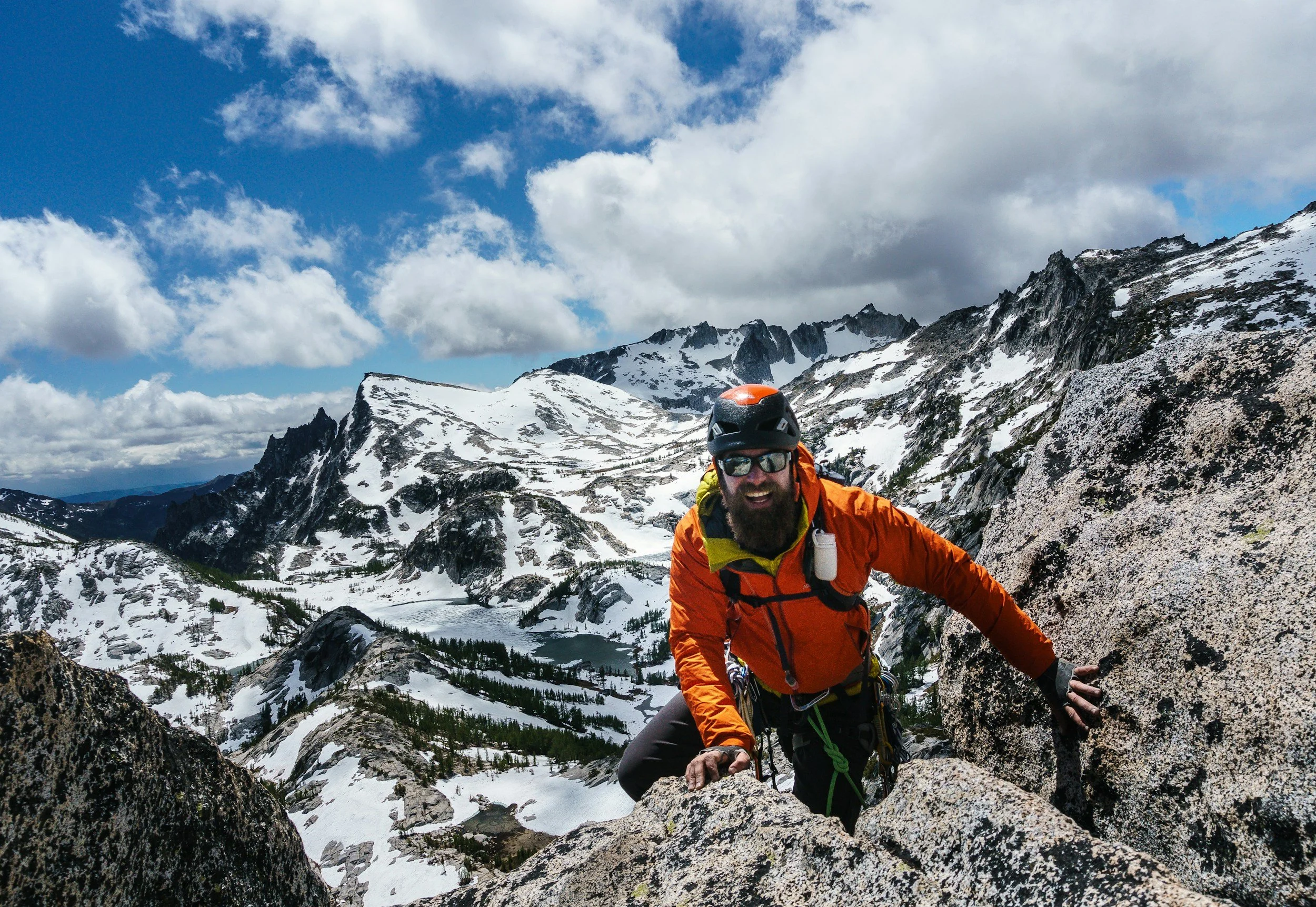
What can you expect from your course
Typical schedule
Note: schedule may change based on location and weather
Morning: Briefing on objectives, gear check, knot review, travel configuration practice.
Mid-morning: Approach and on-ice walking with rope teams; route-finding and crevasse recognition drills.
Midday: Progressive rescue scenarios — self-rescue, partner pull, anchor construction.
Afternoon: Crevasse extraction scenarios using hauling systems; timing and efficiency drills.
Late afternoon: Debrief, Q&A, and recommendations for further training or guided objectives.
FAQ
-
We highly recommend that you bring your own climbing gear that you will use on your expedition so you can become comfortable with it, but if you do not have it available, we can assist you with renting gear. A full equipment list will be provided with booking but will include:
Harness
Helmet
Mountaineering boots
Crampons
Ice axe
Adjustable trekking poles
30L backpack
Clothing layers as appropriate to the weather, gloves
Snacks/hydration (water bottles, thermos. No bladders since the water tube will freeze)
Helmets, mountaineering boots, harnesses, crampons are available to rent by request
-
No, this course is great for beginners just getting into mountaineering!
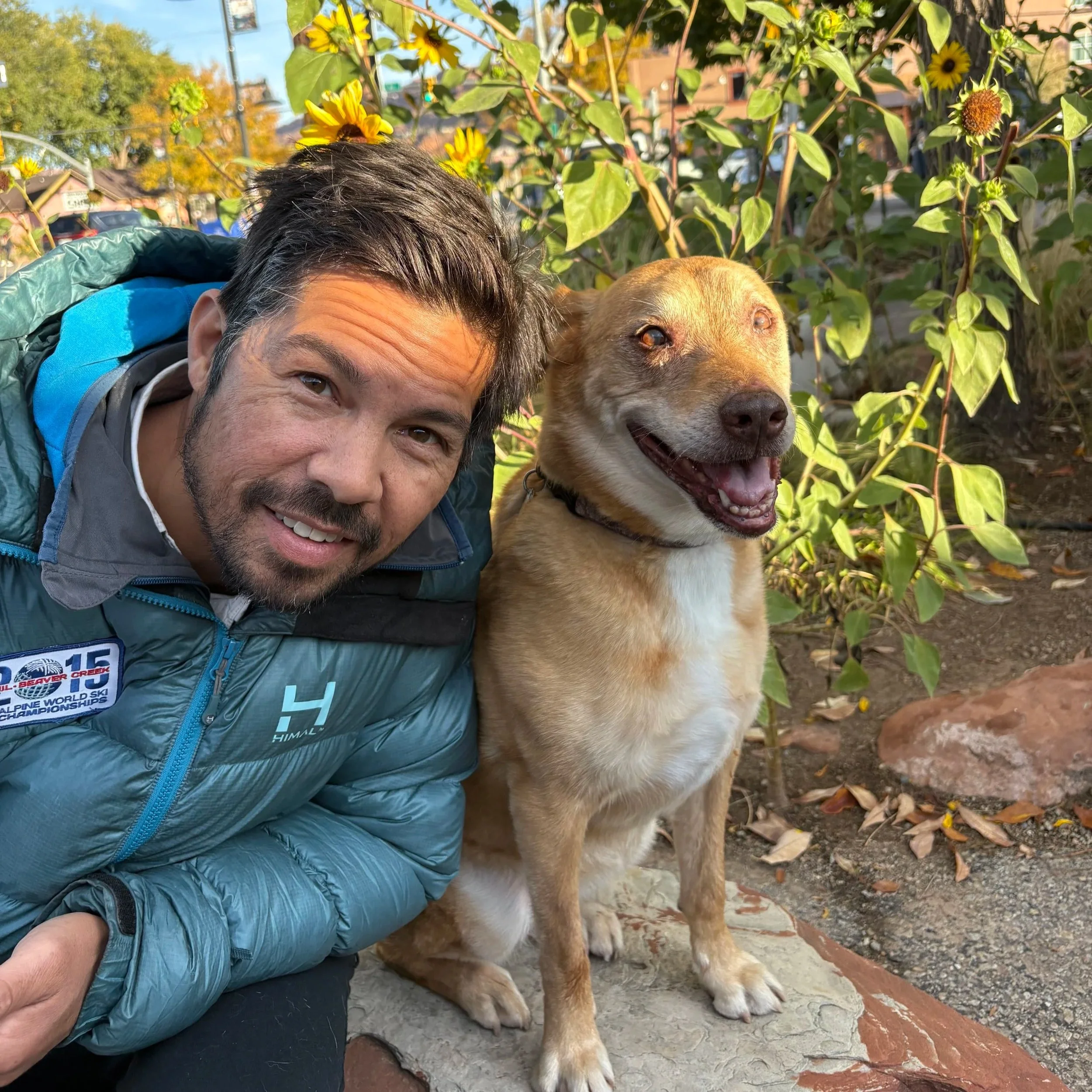
Jesse Tembrevilla Ramos
Owner and Head Guide
Why Hire a Certified Guide?
Professional Training & Experience
AMGA-certified guides bring world-class skills in mountain navigation, safety, and risk management — ensuring you’re in expert hands from start to finish.Customized to You
We tailor each day based on your fitness, interests, and goals. Whether you're new to hiking or looking to level up, we’ll design the perfect experience.Safety & Logistics Handled
Route planning, permits, weather assessments, gear recommendations, and emergency preparedness — it’s all taken care of.Learn As You Go
Gain valuable mountain skills, from efficient hiking techniques to trail navigation, layering systems, and altitude management.
What's Included with all BMG Trips
Route planning and customization
Safety equipment and group gear
Pre-trip consultation (gear, fitness, altitude)
Optional transportation and gear rental coordination
All trips are operated with a focus on Leave No Trace ethics, environmental stewardship, and mountain safety.